
Reference
Beatbox sounds – the list to start from
Every beat is built from a small set of sounds. Here they are, from the three you need on day one to the ones that take months.
Beatboxing has no fixed alphabet – different scenes name sounds differently. What follows is the set we teach in our workshops, ordered by how early you can realistically learn it. Start with the first four. Everything else is decoration until those four are clean.
| Sound | Written as | How it works | Level |
|---|---|---|---|
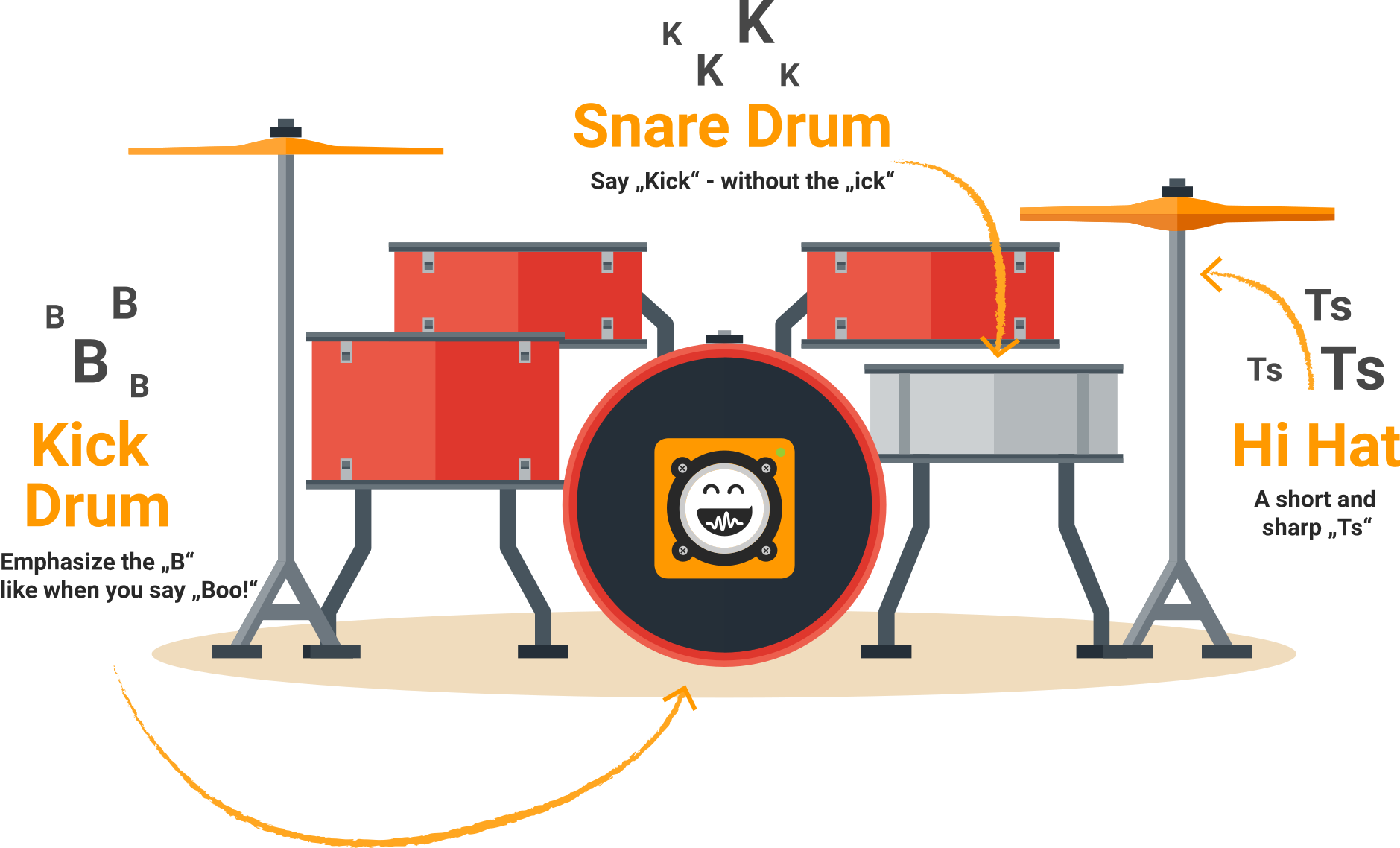
| Kick drum | B | A compressed „B“ released from tensed, slightly pursed lips. The deepest sound in the kit and the one that carries the beat. | Beginner |
| Closed hi-hat | Ts | Tongue tip behind the upper front teeth, short and sharp. Cut it as short as you can. | Beginner |
| Open hi-hat | Tsss | The same movement as the closed hi-hat, but you let the air keep flowing. | Beginner |
| K snare | K | A hard, dry „K“ with the vowel removed. Works while breathing out and while holding your breath. | Beginner |
| Pf snare | Pf | Softer and airier than the K snare. Good in quiet contexts and in vocal percussion. | Beginner |
| Rimshot | Ka / Tk | A short, high crack used as an accent rather than a main snare. | Beginner |
| Tongue click | Tok | A hollow click made by pulling the tongue off the palate. Your first sound that is not a drum imitation. | Easy |
| Inward K snare | K (inhaled) | A K snare produced while breathing in. Solves the air problem completely once it works. | Advanced |
| Inward bass | – | A low, inhaled bass sound. Needs relaxed throat muscles and patience. | Advanced |
| Throat bass | – | A sustained bass note produced in the throat, used under a beat. Do not force it. | Advanced |
| Vocal scratch | – | Imitates a record being scratched. High wow factor, no rhythmic function. | Intermediate |
| Lip roll | Brrr | A rolling lip vibration, used for fills and transitions. | Intermediate |
| Siren | – | A rising and falling pitch made with the voice, borrowed from dancehall and jungle. | Intermediate |
| Click roll | – | A fast series of clicks, the beatbox equivalent of a snare roll. | Intermediate |
The four that matter first
Kick drum, closed hi-hat, K snare, and the breathing that lets you keep going. With those you can play B – Ts – K – Ts, the pattern behind most pop and hip-hop, and that is a real beat – not an exercise. Everything in the lower half of the table builds on the muscle control you develop while getting those four clean.
How to practise a new sound
Take one sound and give it a week. Play it on its own until it is consistent, then put it into a beat you already know, replacing one existing sound. Do not add a second new sound before the first one survives being played fast. Ten minutes a day is enough – the limiting factor is muscle memory, not effort.
Learn them in order
Our free course introduces these sounds one at a time, in the order that actually works: the three basics, then breathing, then the tongue click, then scratches. Ten video lessons, free, no account needed.